
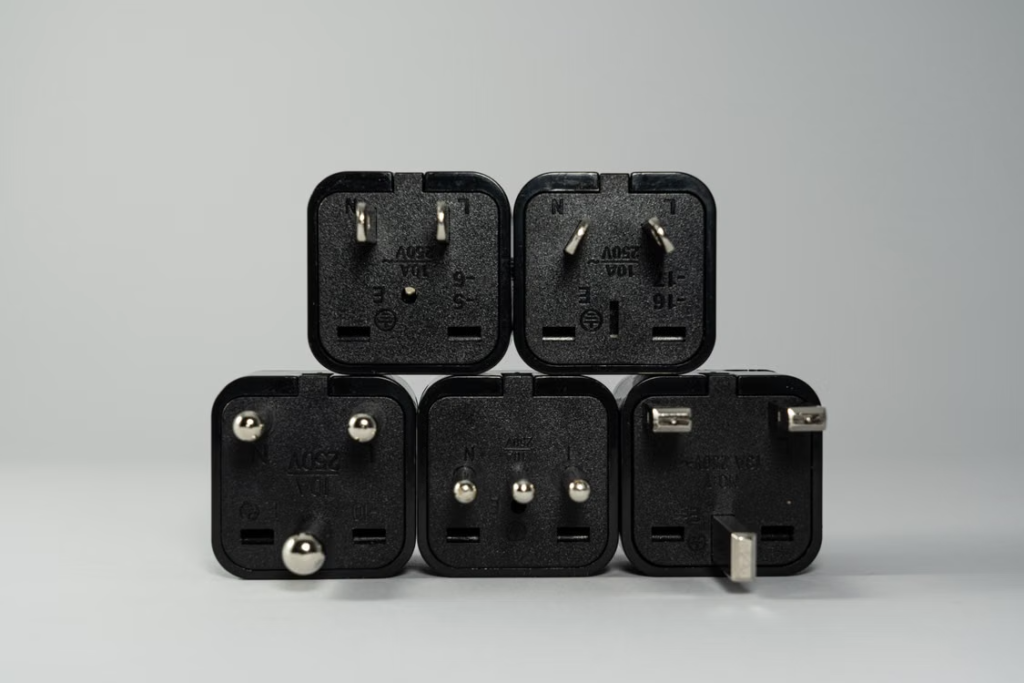
Universal travel adapters may look similar from the outside, but differences in plug coverage, AC construction, USB output, safety design, product size, packaging, and customization can significantly affect where and how a product should be sold.
For importers, distributors, promotional gift companies, and private-label brands, choosing the right model is therefore not simply a matter of selecting the adapter with the highest power rating. The product should match the target market, customer profile, sales channel, price position, and local compliance requirements.
This guide explains the main factors buyers should evaluate before selecting a universal travel adapter for a new project.
1. Start With the Target Market
The first question should not be:
“What is your most powerful travel adapter?”
A better starting point is:
“Where will the product be sold, and where will the end user travel?”
Different countries and regions use different plug and socket systems. A product intended for European business travelers may require a different feature combination from one designed for customers in Japan, the Middle East, Southeast Asia, or South America.
Before selecting a model, define:
- The country where the product will be sold
- The destinations the end users commonly visit
- The required input and output plug types
- Whether grounded connections are important
- The expected retail price
- The applicable safety and labeling requirements
A universal design can provide broad destination coverage, but “universal” should not be interpreted as automatically suitable for every country, every socket, or every electrical appliance.
Importers should confirm the supported plug systems and intended markets with the supplier before placing an order.

2. Understand What a Travel Adapter Does
A standard travel adapter changes the physical plug connection so that a device can be connected to a different wall socket.
In most cases, it does not convert the local mains voltage.
For example, connecting a device designed only for 110V to a 220–240V supply through a basic plug adapter may damage the device or create a safety risk.
Before recommending a travel adapter to customers, check the voltage information printed on the device or its power supply.
Many modern electronic chargers accept a wide input range such as 100–240V. These products can generally be used across different mains-voltage regions when paired with a compatible plug adapter.
However, single-voltage appliances may require a voltage converter or a purpose-designed step-down solution rather than a standard universal travel adapter.
This distinction should be clearly stated in:
- Product packaging
- User manuals
- Online listings
- Distributor training materials
- Customer support information
Clear instructions help reduce misuse, returns, and customer complaints.
3. Choose the Appropriate AC Configuration
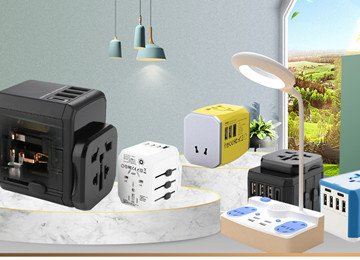
The AC section determines what type of electrical equipment can be connected and how much load the adapter is designed to handle.
Buyers should review:
- Rated voltage
- Rated current
- Maximum permitted load
- Grounding design
- Fuse configuration
- Shutter protection
- Pin structure
- Socket construction
- Applicable warnings
Do not evaluate an adapter only by its advertised maximum wattage.
The practical permitted load can depend on local voltage, product construction, fuse rating, thermal performance, and the device being connected. The rated specifications and instructions supplied with the exact model should always be followed.
AC-Only Travel Plug ConvertersTravel Adapters
AC-only models are suitable when the main purpose is plug conversion.
They may be appropriate for:
- Basic travel retail
- Lower-cost promotional projects
- Customers who already carry a separate charger
- Hotel welcome kits
- Corporate travel packs
- Simple branded gifts
Their advantages can include a lower cost, simpler operation, compact size, and fewer charging specifications for buyers to manage.
Travel Adapters With USB Charging
Models with integrated USB-A or USB-C ports allow users to charge electronic devices without occupying the AC socket.
They may be more suitable for:
- Online retail
- Business travelers
- Premium corporate gifts
- Mobile-device users
- Travel accessory brands
- Multi-device charging scenarios
The correct choice depends on both the number of ports and their actual output capability.
4. Match USB Power to the End User
Higher power is useful only when it matches the intended devices and price position.
A buyer should first identify what the customer is expected to charge.
Entry-Level USB Output
Basic USB charging may be sufficient for:
- Earphones
- Small accessories
- Older mobile devices
- Budget travel kits
- Promotional giveaways
These products can support price-sensitive projects, but the charging speed and supported protocols must be described accurately.
PD20W-Class Travel Adapters
A PD20W-class design is commonly positioned for smartphone charging and compact everyday travel.
It can be suitable for:
- Mobile-focused users
- Entry-level USB-C travel products
- Compact gift sets
- Promotional projects requiring a modern charging feature
- Retailers seeking a balance between size and cost
Buyers should still verify the output of each port and the total shared output when more than one device is connected.
PD45W-Class Travel Adapters
A PD45W-class model may offer a stronger balance between portability and charging capability.
Depending on the connected device and supported charging protocol, it can be positioned for:
- Smartphones
- Tablets
- Selected lightweight laptops
- Business travel
- Premium online retail
- Multi-device users
The product page should not simply state “45W fast charging.” It should explain which port can reach the maximum output and what happens when several ports are used simultaneously.
PD65W-Class Travel Adapters
A PD65W-class model is generally aimed at more demanding users and higher-value product ranges.
Potential applications include:
- Laptop users
- Business travelers
- Digital professionals
- Premium travel kits
- Technology gift sets
- Customers replacing multiple chargers with one product
For multi-port designs, buyers should request a complete power-distribution table showing:
- Single-port output
- Two-port output combinations
- Three-port or full-load combinations
- Supported charging protocols
- Total maximum output
The headline power number alone does not explain the complete charging experience.
5. Review Power Distribution, Not Just Total Wattage
Multi-port travel adapters often share power dynamically.
For example, a product may provide its highest rated output when only one USB-C port is in use. Once a second or third device is connected, the available power may be divided among the ports.
This is normal in many multi-port charging products, but it needs to be communicated clearly.
Before ordering, request:
- A port-by-port output table
- Output under each common port combination
- Protocol information
- Test reports for representative devices
- Confirmation of whether ports redistribute power after a device is connected or removed
This information is especially important for Amazon sellers and online retailers because unclear output descriptions can result in negative reviews.
6. Consider Product Size and Portability
Travel products should be easy to pack, carry, and use.
However, making an adapter as small as possible is not always the best solution. Higher-output electronics, additional USB ports, internal safety components, retractable cables, and voltage-conversion functions all require space and careful thermal design.
Evaluate:
- Overall dimensions
- Net weight
- Plug retraction mechanism
- Ease of switching between plug types
- Stability in the wall socket
- Distance from nearby sockets
- Port accessibility
- Storage convenience
A compact PD20W model may be more attractive for a lightweight gift set, while a larger PD65W model may be more appropriate for a premium business-travel package.
The correct size depends on the customer scenario.
7. Check Internal Construction and Safety Details
Two travel adapters with a similar appearance can have very different internal structures and cost levels.
Important differences may include:
- Plastic quality
- Flame-retardant properties
- Copper thickness and contact structure
- Fuse quality
- Safety shutters
- PCB design
- Electronic components
- Temperature control
- Assembly consistency
- Plug-locking mechanism
- Product testing
Buyers should not compare quotations only by product appearance and advertised output.
Ask the supplier to explain:
- The materials used
- The applicable product standard
- The inspection process
- Electrical and mechanical testing
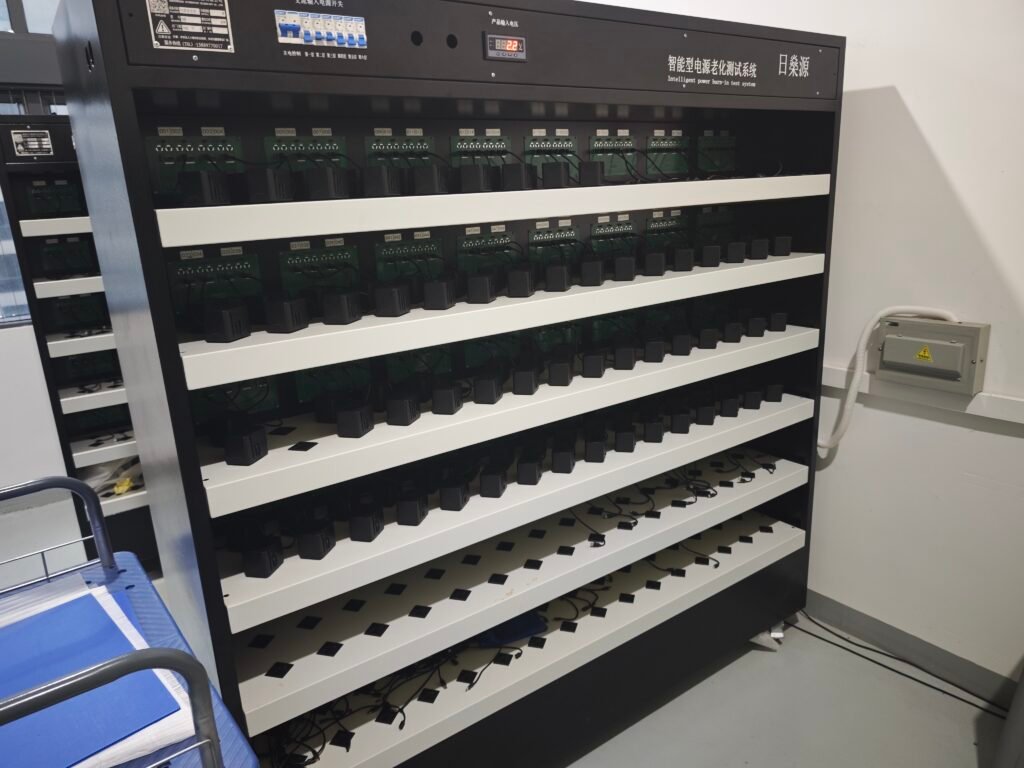
- Aging-test arrangements
- Production traceability
- Quality-control checkpoints
For a branded product, stable production and clear inspection standards are often more important than achieving the lowest possible unit price.
8. Confirm Certification and Market Requirements
Certification requirements vary according to the product design, target country, sales channel, and whether the adapter includes charging electronics.
A test report or certificate should not be accepted only because the product name looks similar.
Verify:
- The exact model number
- Product photographs
- Electrical ratings
- Plug configuration
- USB output
- Applicant and manufacturer information
- Test standard
- Issue date
- Whether customized changes affect the existing report
Changes to the housing, plug structure, PCB, components, rated output, or internal construction may require additional evaluation.
Importers should also confirm local requirements with a qualified compliance professional or testing laboratory before launching the product.
9. Select the Right Product for the Sales Channel
The same travel adapter may not be suitable for every channel.
Promotional Gift Companies
Promotional buyers may prioritize:
- Visible logo area
- Stable branding effect
- Flexible order quantity
- Gift packaging
- Delivery schedule
- Target budget
- Simple user experience
An AC-only or PD20W adapter combined with a cable and carrying case can often create a practical corporate travel set.
Online Sellers
Online sellers may place greater emphasis on:
- Clear feature differentiation
- Attractive product photography
- Charging specifications
- Review risk
- Packaging dimensions
- Product instructions
- Certification documents
- Consistent quality
Power-distribution information and accurate compatibility descriptions are particularly important.
Distributors and Wholesalers
Distributors may require:
- A structured product range
- Several price levels
- Stable repeat production
- Neutral and branded packaging options
- Spare packaging materials
- Market-specific documentation
- Long-term model availability
A supplier with AC-only, entry-level USB, PD20W, PD45W, PD65W, and special-function models can help distributors build a more complete category.
Premium Brands and Corporate Gifts
Premium projects may focus on:
- Surface finish
- Color matching
- Custom packaging
- Accessory selection
- Product presentation
- Compact organization
- User experience
- Quality consistency
A travel adapter can be combined with a USB cable, EVA case, PU pouch, passport holder, luggage tag, or tracker to create a more complete travel gift solution.
10. Evaluate OEM and ODM Options
Customization can range from simple branding to a fully developed product.
Common OEM options include:
- Logo printing
- Laser engraving
- Custom color
- Custom sleeve
- Color box
- User manual
- Barcode label
- Gift packaging
- Cable combination
- Carrying case
- Accessory bundle
More advanced ODM projects may involve:
- Housing changes
- Mold development
- Port configuration
- PCBA development
- Output adjustment
- Functional integration
- Packaging-structure development
- Product testing and validation
Before starting an OEM project, prepare the following information:
- Target market
- Expected quantity
- Required power
- Preferred port configuration
- Product color
- Logo artwork
- Packaging concept
- Certification requirements
- Target delivery date
- Target price range
The more complete the initial brief is, the easier it becomes for the supplier to recommend a suitable base model and customization route.
11. Ask for Samples Before Mass Production
Samples help buyers evaluate more than appearance.
A proper sample review should include:
- Plug operation
- Socket fit
- Port output
- Charging compatibility
- Heat performance
- Product dimensions
- Logo position
- Color
- Packaging fit
- Instructions
- General workmanship
For customized projects, the process may include:
- Existing neutral sample
- Logo or pre-production sample
- Packaging sample
- Final pre-production approval
- Mass-production inspection
Keep written approval records for the product, artwork, specifications, packaging, and labeling.
This reduces misunderstandings during mass production.
12. Use a Practical Supplier Checklist
Before confirming an order, ask the supplier for:
- Full product specifications
- Supported plug types
- Rated voltage and current
- AC load information
- USB output table
- Charging protocols
- Product dimensions and weight
- Material information
- Fuse and shutter details
- Available reports and certificates
- MOQ
- Sample cost
- Production lead time
- Packaging options
- Logo methods
- Quality-control procedure
- Warranty terms
- Carton information
A reliable supplier should be able to answer these questions clearly rather than relying only on a product image or a short quotation.
Conclusion
The right universal travel adapter is not necessarily the model with the most ports or the highest advertised power.
It is the model that best matches:
- The target country
- The end user’s devices
- The required plug coverage
- The sales channel
- The expected price level
- The applicable compliance requirements
- The brand’s positioning
- The project’s customization needs
For a budget promotional campaign, a compact AC-only or PD20W model may be the most practical choice. For business travelers and technology-focused retail channels, a PD45W or PD65W multi-port model may provide stronger value. For premium gift projects, packaging and accessory integration may be just as important as the adapter itself.
By defining the application first and comparing complete specifications rather than headline wattage alone, buyers can select a safer, more competitive, and more marketable product.
Frequently Asked Questions
Is a universal travel adapter also a voltage converter?
Usually not. A standard travel adapter changes the plug connection but does not normally change the mains voltage. Single-voltage appliances may require a separate voltage converter or a purpose-designed conversion product.
What power level should I choose for a travel adapter?
The answer depends on the intended devices. Entry-level USB or PD20W models are commonly positioned for mobile devices, while PD45W and PD65W models may be more suitable for tablets, selected laptops, business travelers, and multi-device users.
Can one universal travel adapter be sold in every country?
Not automatically. Plug compatibility, product standards, labeling, certification, grounding expectations, and local regulations vary. Importers should evaluate each target market separately.
What information should an importer request from a supplier?
Request complete AC ratings, USB output distribution, supported protocols, dimensions, material details, testing information, certificates, packaging options, MOQ, lead time, and quality-control procedures.
Can a travel adapter be customized as a corporate gift?
Yes. Common options include logo printing, custom colors, gift boxes, EVA cases, cables, PU pouches, passport holders, luggage tags, and other travel accessories. Availability and MOQ depend on the product and customization method.
Need Help Selecting a Travel Adapter?
HYU NEXUS provides travel adapters, charging-enabled travel adapters, plug converters, and customized travel gift solutions for importers, distributors, promotional gift companies, and private-label brands.
Tell us your target market, expected quantity, required power, preferred packaging, and customization ideas. We will help you identify a suitable product direction for your project.